Oh, maaf! Maksud kamu judul-judul babnya juga diterjemahkan ke bahasa Inggris tapi *tetap* pakai jenis font tebal yang unik itu, ya?
Ini dia versi bahasa Inggris lengkap dengan font khusus tersebut supaya tinggal kamu *copy-paste*:
---
The Innovation of Sacha Inchi Shells as a Natural Scrub Ingredient in Cosmetics
The modern cosmetics industry continues to search for natural exfoliator ingredients to replace microbeads, which have been banned due to environmental concerns. One natural ingredient drawing significant attention is the Sacha Inchi shell, the hard outer hull that protects the Sacha Inchi seed (also known as the "Inca peanut"). The Sacha Inchi plant (*Plukenetia volubilis*) originates from the Amazon rainforest and is now cultivated in various countries, including Indonesia, for its seed oil which is rich in omega-3 and antioxidants. The oil extraction process generates by-product waste in the form of seed shells. Utilizing Sacha Inchi shells as a natural scrub ingredient is an innovative effort to increase the value of agricultural waste while providing an eco-friendly exfoliator alternative for cosmetic products.
𝐏𝐫𝐨𝐟𝐢𝐥𝐞 𝐨𝐟 𝐒𝐚𝐜𝐡𝐚 𝐈𝐧𝐜𝐡𝐢 𝐚𝐧𝐝 𝐈𝐭𝐬 𝐒𝐡𝐞𝐥𝐥 𝐖𝐚𝐬𝐭𝐞
Sacha Inchi is an oilseed-producing plant with a high lipid content (about 35–60% of the seed weight is oil). Sacha Inchi oil is enriched with omega-3 fatty acids (alpha-linolenic acid) and vitamin E, making it popular as a topical cosmetic ingredient for moisturizers and antioxidants. After the oil is extracted or the seeds are processed for consumption, the Sacha Inchi seed shells remain as solid waste. These shells have a hard, fibrous texture, resembling other nut shells (such as walnut or almond shells). Efforts to utilize Sacha Inchi shells not only reduce waste but also align with sustainability principles by turning them into useful materials for consumer products.
𝐂𝐡𝐞𝐦𝐢𝐜𝐚𝐥 𝐂𝐨𝐦𝐩𝐨𝐬𝐢𝐭𝐢𝐨𝐧 𝐨𝐟 𝐒𝐚𝐜𝐡𝐚 𝐈𝐧𝐜𝐡𝐢 𝐒𝐡𝐞𝐥𝐥𝐬
Chemically, Sacha Inchi shells are classified as lignocellulosic materials with a very high fiber content. Proximate analysis shows that the majority of the shell components consist of crude fiber (cellulose and hemicellulose) and lignin, with cellulose content estimated above 30% and lignin around 20–30% of the dry weight. Mineral ash content is also found in small amounts, while residual protein and fat levels are relatively low. Preliminary studies report that Sacha Inchi shells contain polyphenol compounds (such as flavonoids and tannins) that contribute to antioxidant activity. The presence of these natural antioxidants adds value, as they potentially provide skin protection against free radicals when the shells are used in skincare products.
𝐏𝐡𝐲𝐬𝐢𝐜𝐚𝐥 𝐂𝐡𝐚𝐫𝐚𝐜𝐭𝐞𝐫𝐢𝐬𝐭𝐢𝐜𝐬 𝐚𝐬 𝐚 𝐒𝐜𝐫𝐮𝐛 𝐌𝐚𝐭𝐞𝐫𝐢𝐚𝐥
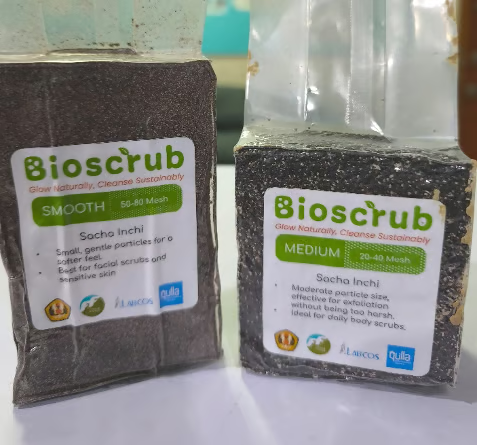
Physically, the fine particles of Sacha Inchi shells have an abrasive texture that is effective for removing dead skin cells. After undergoing a drying and milling process, the shells can be converted into powder with a controlled particle size (generally hundreds of micrometers). The shell particles are hard yet relatively light, and this shell flour is insoluble in water, making it suitable as a mechanical exfoliation agent in both water-based and oil-based cosmetic formulations. The color of Sacha Inchi shell powder is usually light brown to dark brown, which may slightly affect the color of the final product. In terms of stability, these shell granules are stable across various formulation pH levels and do not degrade easily during product storage. These characteristics are similar to other natural scrub ingredients like walnut shell powder or apricot seeds, which have long been used in exfoliating cosmetics.
𝐁𝐞𝐧𝐞𝐟𝐢𝐭𝐬 𝐨𝐟 𝐄𝐱𝐟𝐨𝐥𝐢𝐚𝐭𝐢𝐨𝐧 𝐰𝐢𝐭𝐡 𝐍𝐚𝐭𝐮𝐫𝐚𝐥 𝐒𝐜𝐫𝐮𝐛𝐬
Skin exfoliation with natural abrasive particles offers various benefits supported by dermatological research. Removing dead skin cells (*stratum corneum*) from the skin surface helps stimulate the regeneration of new skin cells and improves skin texture smoothness. Physical scrubs also help clear clogged pores, reduce blackheads, and allow subsequent skincare products to be absorbed more effectively. Compared to chemical exfoliators (such as AHA/BHA acids), physical scrubs provide a massaging effect and increase microcirculation in the skin during application. Using a scrub made from Sacha Inchi shells combines these benefits with the added advantage of natural antioxidant content from polyphenols, which may also nourish the skin.
𝐀𝐝𝐯𝐚𝐧𝐭𝐚𝐠𝐞𝐬 𝐨𝐟 𝐒𝐚𝐜𝐡𝐚 𝐈𝐧𝐜𝐡𝐢 𝐒𝐡𝐞𝐥𝐥𝐬 𝐚𝐬 𝐚 𝐒𝐜𝐫𝐮𝐛 𝐌𝐚𝐭𝐞𝐫𝐢𝐚𝐥
Compared to synthetic scrubs (such as polyethylene microbeads) and other natural scrubs, Sacha Inchi shells possess several advantages. First, this material is sourced from renewable and biodegradable agricultural waste, thereby supporting eco-friendly product claims. Second, Sacha Inchi shell particles do not cause marine microbead pollution after being rinsed off, unlike synthetic exfoliators. Third, the hardness and shape of the shell particles can be adjusted through milling techniques to produce an effective yet skin-safe scrub (not overly abrasive). Fourth, the potential antioxidant content within the shells can provide a functional value-add that inert mineral scrubs (such as silica sand) lack. Furthermore, utilizing Sacha Inchi shells represents a form of circular economy—turning what was once waste back into a useful product, which can enhance the "green" and sustainable image of cosmetic brands.
𝐀𝐩𝐩𝐥𝐢𝐜𝐚𝐭𝐢𝐨𝐧𝐬 𝐢𝐧 𝐂𝐨𝐬𝐦𝐞𝐭𝐢𝐜 𝐏𝐫𝐨𝐝𝐮𝐜𝐭𝐬
The utilization of Sacha Inchi shells as a scrub can be applied to various skincare products. Below are examples of applications along with formulation considerations:
𝐅𝐚𝐜𝐢𝐚𝐥 𝐒𝐜𝐫𝐮𝐛
Facial scrubs are generally formulated to be gentler than body scrubs because facial skin is thinner and more sensitive. Finely milled Sacha Inchi shells can be added to a gel or cream cleanser base as an exfoliating agent. It is recommended to use small particle sizes (around 100–300 micrometers) at a relatively low concentration. Based on industry practice, a shell powder concentration of about 1–5% of the total formula is already effective for facial scrubs. At this level, the scrub is capable of gently removing dead skin cells without causing excessive irritation. In comparison, commercial facial scrub products often use walnut shell powder or apricot seeds in this concentration range to yield a mild exfoliating texture.
𝐁𝐨𝐝𝐲 𝐒𝐜𝐫𝐮𝐛
In body scrub products, the level of exfoliation can be higher because body skin (such as on the arms and legs) tends to be thicker and less sensitive than facial skin. Sacha Inchi shell powder can be blended into a body scrub cream or gel base, or even traditional body scrubs (*lulur*). The particle size can be slightly larger (e.g., 300–500 micrometers) for a more noticeable massaging effect. The usage concentration of Sacha Inchi shells in body scrubs can be higher, generally ranging between 5–10% of the formulation weight. Some commercial body scrub formulations even use natural exfoliator particles up to 10% or more to achieve the desired thick texture and coarseness. At this level, the scrub provides an effective peeling effect to smooth out rougher skin areas (like elbows and knees) while remaining safe and comfortable to use.
𝐄𝐱𝐟𝐨𝐥𝐢𝐚𝐭𝐢𝐧𝐠 𝐒𝐨𝐚𝐩
Sacha Inchi shell particles can also be added to bar soaps or liquid soaps to provide a mild exfoliating effect during use. In handmade bar soaps (such as cold process soaps), the shell powder can be mixed in at the "trace" stage before the soap hardens. The customary concentration ranges from 2–5% of the soap's weight, depending on how strong of a scrubbing effect is desired. In liquid soaps or exfoliating shower gels, the shell particles can be dispersed within a surfactant base with the addition of a suspending agent to prevent them from settling. Using Sacha Inchi shells in soap adds value because users can gently exfoliate their skin during every shower while still obtaining the cleansing benefits of the soap. A number of exfoliating soap brands on the market already use natural shell powders (such as apricot seed or coconut shell powder) within this percentage range to create a scrub texture in soap.
𝐄𝐱𝐟𝐨𝐥𝐢𝐚𝐭𝐢𝐧𝐠 𝐅𝐚𝐜𝐞 𝐌𝐚𝐬𝐤
Some face mask products are designed with a dual function: in addition to nourishing the skin, they provide a physical exfoliation effect when rinsed off. In such masks, Sacha Inchi shell powder can be added in small amounts (about 1–3% of the formula). The fine shell particles are mixed into the mask base (such as clay masks or cream masks). When the mask is applied and then lightly massaged before rinsing, the shell particles will help lift dead skin cells. The concentration is kept low so that the mask remains comfortable while sitting on the face and is not too abrasive during the massage phase. Analogously, commercial masks with scrub ingredients (such as masks with oatmeal powder or seeds) typically contain <5% exfoliating particles. The addition of Sacha Inchi shells to masks provides an exfoliating value-add along with the potential delivery of antioxidant nutrients to the skin while the mask is applied.
𝐄𝐱𝐚𝐦𝐩𝐥𝐞𝐬 𝐨𝐟 𝐂𝐨𝐦𝐦𝐞𝐫𝐜𝐢𝐚𝐥 𝐏𝐫𝐨𝐝𝐮𝐜𝐭𝐬 𝐚𝐧𝐝 𝐑𝐞𝐥𝐚𝐭𝐞𝐝 𝐑𝐞𝐬𝐞𝐚𝐫𝐜𝐡
The use of natural shell or seed powders as scrubs has been implemented in various commercial products. For instance, the well-known brand St. Ives uses walnut shell powder in its *St. Ives Fresh Skin Apricot Scrub*, which is one of the most popular natural facial scrubs. The product utilizes walnut shell powder to effectively slough off dead skin cells. As another example, The Body Shop features a *Coconut Exfoliating Cream Body Scrub* that uses coconut shell powder as a natural exfoliator ingredient. This demonstrates the cosmetics industry's trend of utilizing shell/seed waste as high-value ingredients. Although specific reports on the use of Sacha Inchi shells in commercial products are still rare to date, its potential usage aligns with the success of similar materials. Scientific research has also begun evaluating the utilization of Sacha Inchi waste; for example, a study by Chirinos et al. (2013) found high polyphenol content and antioxidant activity in Sacha Inchi shells. Such findings reinforce the scientific foundation for cosmetic manufacturers to consider Sacha Inchi shells as a raw material.
𝐑𝐞𝐜𝐨𝐦𝐦𝐞𝐧𝐝𝐞𝐝 𝐔𝐬𝐚𝐠𝐞 𝐏𝐞𝐫𝐜𝐞𝐧𝐭𝐚𝐠𝐞𝐬
Based on literature and general formulation guidelines in the cosmetics industry, here are the suggested percentage ranges for using Sacha Inchi shell powder (or similar scrub materials) in various products:
- 𝐅𝐚𝐜𝐢𝐚𝐥 𝐒𝐜𝐫𝐮𝐛: 1–5% of the total formula weight. This low percentage is sufficient for a mild exfoliation that is safe for facial skin.
- 𝐁𝐨𝐝𝐲 𝐒𝐜𝐫𝐮𝐛: 5–10% of the total formula weight. A higher concentration provides a stronger scrubbing effect suitable for the body's skin needs.
- 𝐁𝐚𝐫/𝐋𝐢𝐪𝐮𝐢𝐝 𝐒𝐨𝐚𝐩: 2–5% of the soap formula weight. Enough to provide a scrub effect without compromising the soap’s lathering capability or structure.
- 𝐅𝐚𝐜𝐞 𝐌𝐚𝐬𝐤: 1–3% of the formula weight. A small amount is adequate considering the mask rests on the face and exfoliation is done briefly during rinsing.
The ranges above can be adjusted according to the particle size and the desired level of exfoliation. Formulators need to conduct stability and irritation tests to ensure the chosen concentration is safe and effective. However, generally speaking, these ranges have been used in successful exfoliating product formulations on the market.
𝐂𝐡𝐚𝐥𝐥𝐞𝐧𝐠𝐞𝐬 𝐚𝐧𝐝 𝐂𝐨𝐧𝐬𝐢𝐝𝐞𝐫𝐚𝐭𝐢𝐨𝐧𝐬
While promising, utilizing Sacha Inchi shells as a cosmetic ingredient also presents challenges. One challenge is the consistency of raw material supply and processing. Required are standardized cleaning, drying, and milling processes to ensure the shell powder is free from impurities and uniform in size. Particles that are too coarse or have sharp edges risk injuring the skin, making quality control vital. Additionally, it must be ensured that there are no allergen residues or contaminants (such as residual nut proteins or pesticides) on the shell powder before formulation. From a formulation standpoint, the dispersion stability of particles within the product (especially in liquid soaps or gels) must be maintained so that the particles do not settle or cause product discoloration over time. Safety tests, such as skin irritation tests, should also be performed to ensure that Sacha Inchi shell-based scrub products are well-tolerated by various skin types.
𝐂𝐨𝐧𝐜𝐥𝐮𝐬𝐢𝐨𝐧
Sacha Inchi shells represent a highly promising natural material that can be integrated into cosmetic formulations as an exfoliating scrub. With an abundant lignocellulosic fiber composition and supportive physical characteristics, these shells are capable of acting as an effective dead skin cell removal agent. Its advantages—such as resource sustainability, biodegradability, and potential antioxidant contribution—make it an attractive alternative to microbeads or mineral scrubs. Although its use in commercial products is still relatively new, the industry trend toward natural and eco-friendly ingredients opens up a massive opportunity for Sacha Inchi shells to be widely adopted. Further research support and collaboration between Sacha Inchi oil producers and cosmetic formulators will accelerate the realization of this innovative utilization. Ultimately, utilizing Sacha Inchi shells as a natural scrub not only benefits the cosmetics industry and consumers but also supports overall environmental sustainability efforts.