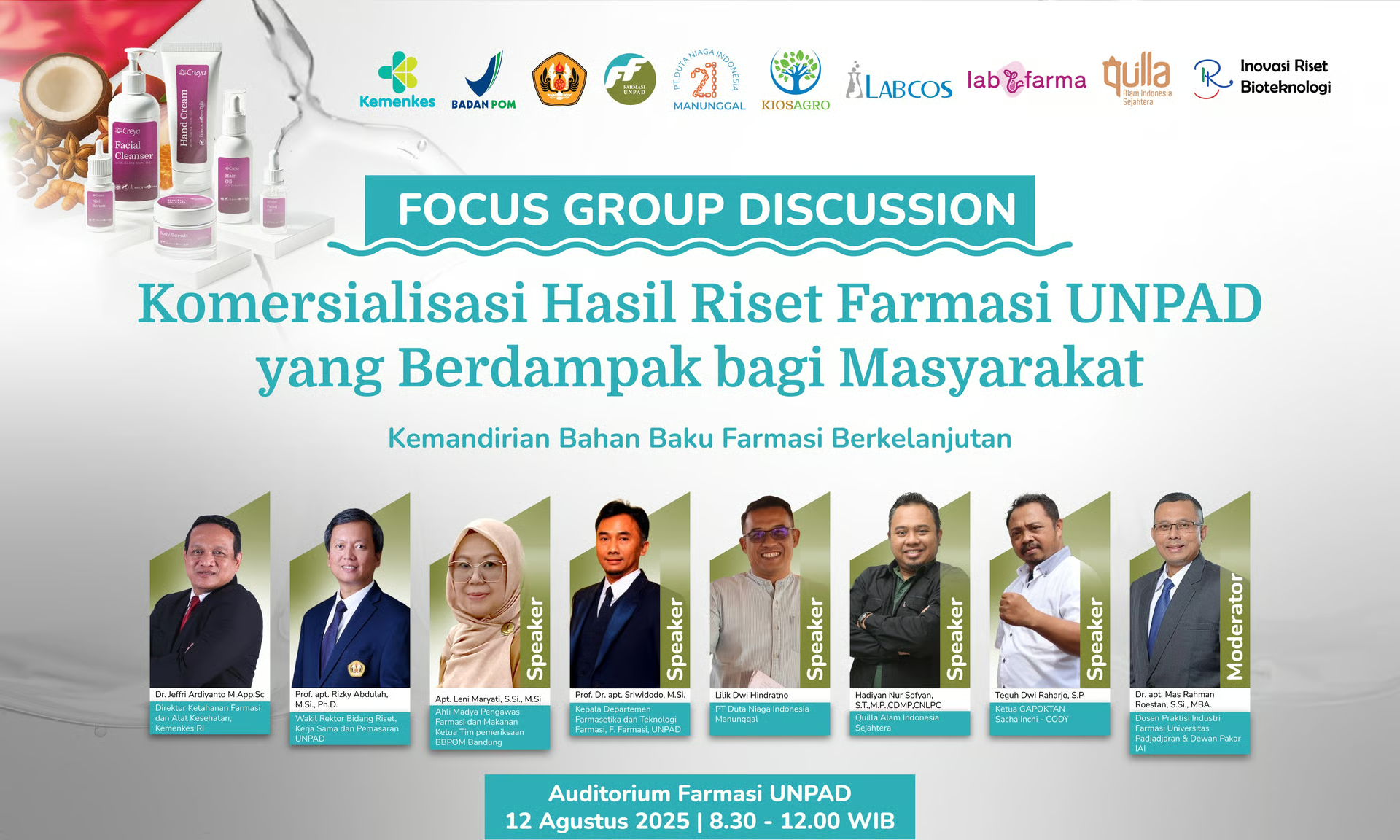
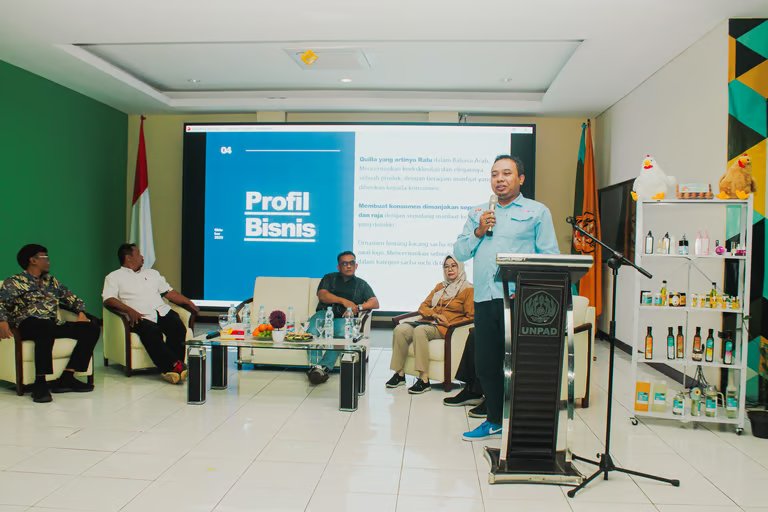
Bandung, 12 August 2025 — The Faculty of Pharmacy, Padjadjaran University (UNPAD) through the UNPAD Farma Academic Business Unit (UUA) signed a Cooperation Agreement (PKS) with PT Duta Niaga Indonesia Manunggal (DNIM) to develop health products based on research results towards the commercialization stage. The signing of this PKS was the main agenda in the Focus Group Discussion (FGD) with the theme "Commercialization of Pharmaceutical Research Results for the Independence of National Pharmaceutical Raw Materials" which was held at the Faculty of Pharmacy, UNPAD Jatinangor, which was attended by all elements of the pentahelix of the research ecosystem that had been formed, namely academics from several universities, the combined community of Sacha Inchi farmer groups, raw materials industry, pharmaceutical, nutraceutical and cosmetic product industries, the Indonesian Ministry of Health and BBPOM in Bandung, as well as community groups. media.
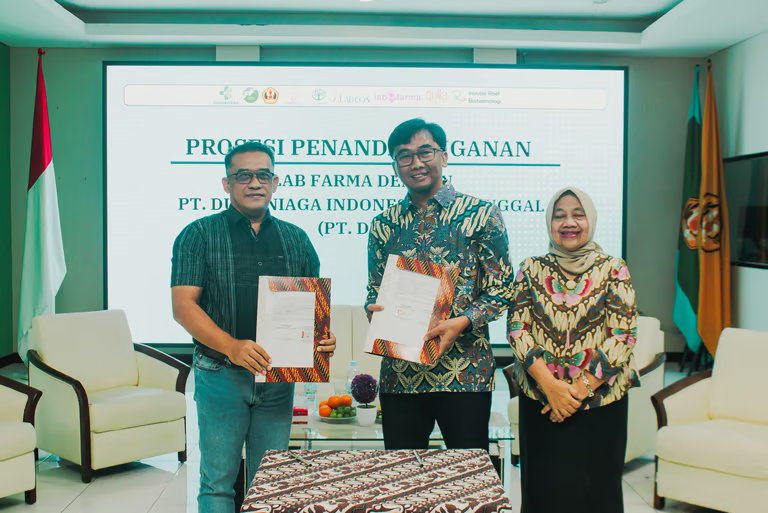
This PKS was signed by the Dean of the UNPAD Faculty of Pharmacy, Prof. Dr. apt. Ajeng Diantini, M.Sc., Chair of UUA UNPAD Farma, Prof. Dr. apt. Sriwidodo, M.Sc., and President Director of PT DNIM, Lilik Dwi Hindratno. Apart from that, the Director of Pharmaceutical Resilience and Medical Devices at the Ministry of Health of the Republic of Indonesia and the Deputy Chancellor for Research, Cooperation and Marketing at Unpad also witnessed the signing of the PKS.
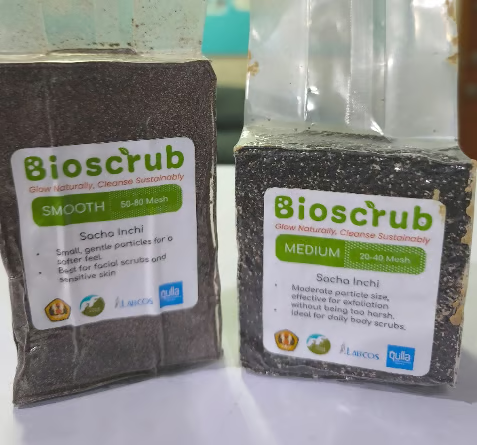
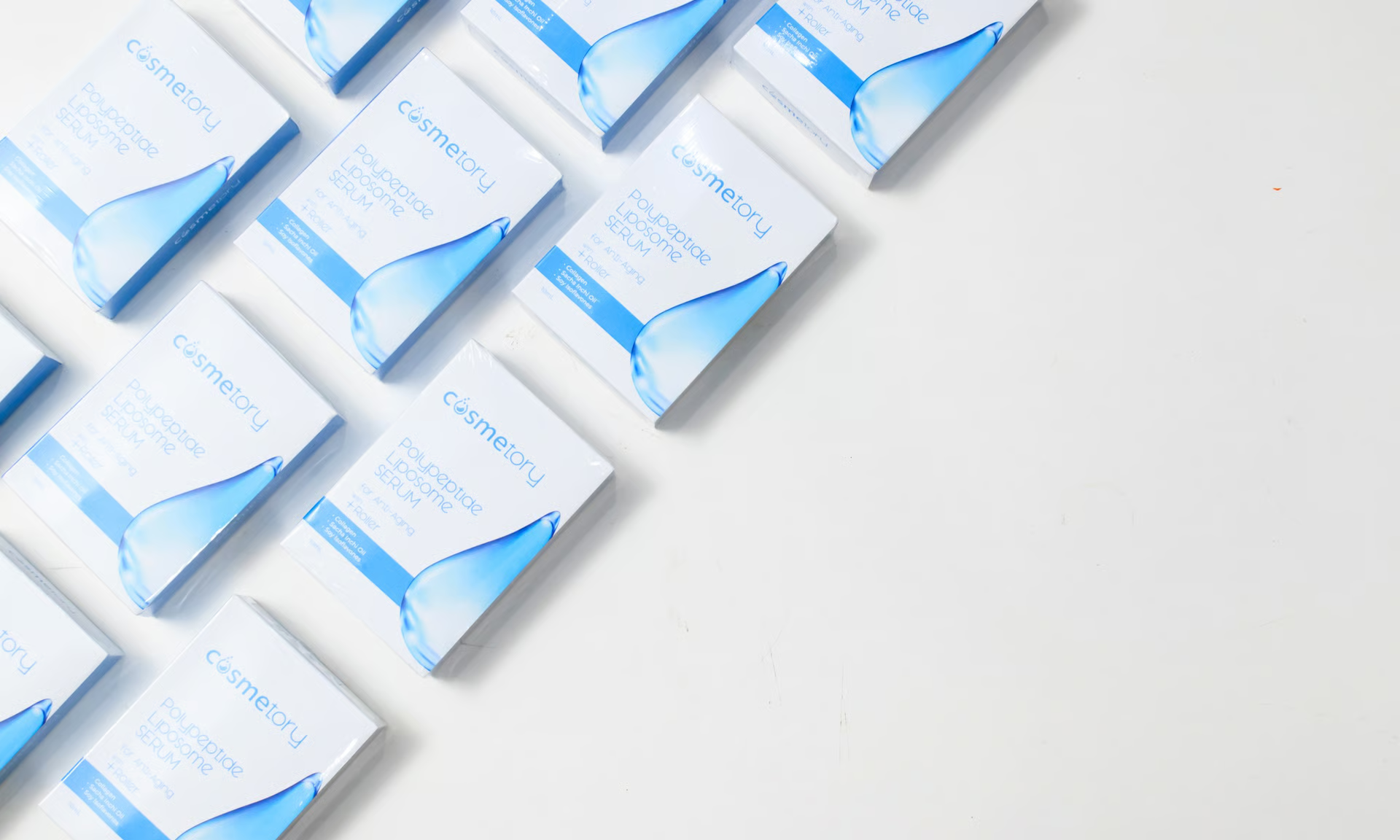
The collaboration focuses on the use of sacha inchi nut oil—a natural source of omega 3, 6, and 9—which the UNPAD Faculty of Pharmacy research team has developed into raw material for pharmaceutical grade oil, in collaboration with Quilla Herbal Indonesia over the last 5 years into a formulation ready for industrialization. UNPAD Farma has produced 32 innovative sacha inchi-based pharmaceutical products including Biosachi, Bioscrub, VOmega, Omegrow, Cosmetory, Creya, Sachi Cubratin, Svarga Serenity Sacha, Vetachi, which cover the categories of functional food, health supplements, cosmetics and pet-veterinary products.
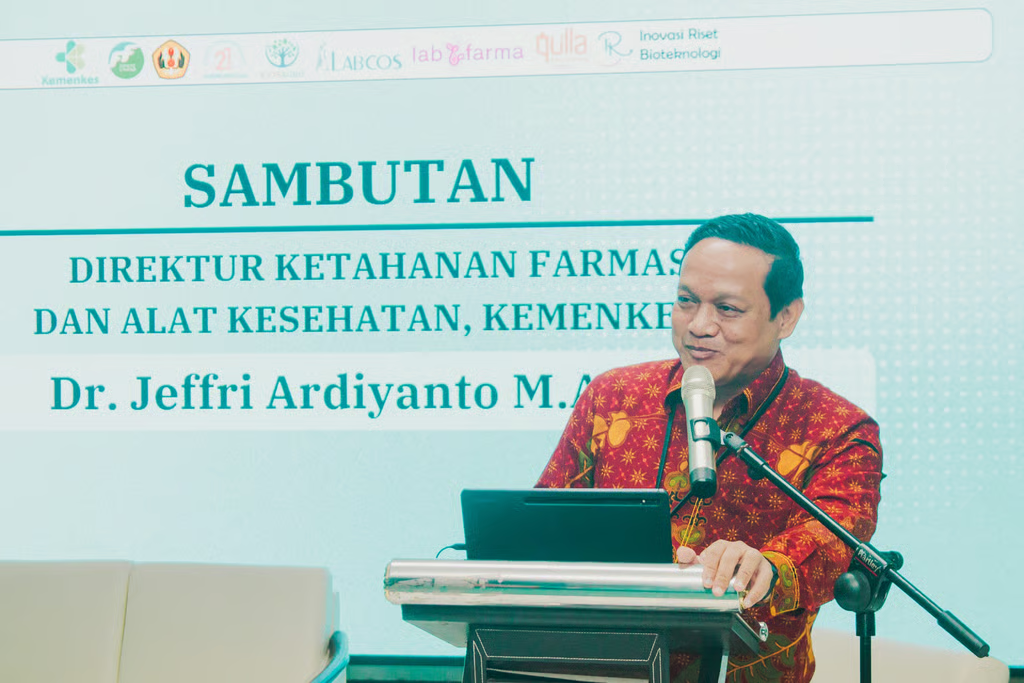
In his remarks, the Director of Pharmaceutical Resilience and Medical Devices, Ministry of Health of the Republic of Indonesia, Dr. Jeffri Ardiyanto, M.App.Sc., who emphasized the importance of this step. "With the level of dependence on imports of raw materials still at 80-90%, the development of research on natural materials and phytopharmaceutical products is very strategic. The Ministry of Health fully supports this effort, including through regulations and facilitating meetings between academics and industry. The signing of the PKS today is an important momentum to strengthen the innovation ecosystem and accelerate the use of research results for public health and welfare," he said.
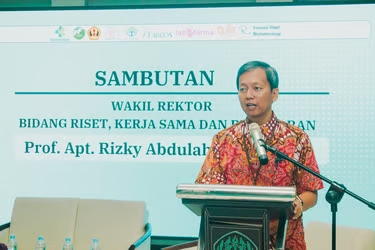
Unpad Deputy Chancellor for Research, Cooperation and Marketing, Prof. apt. Rizky Abdulah, M.Si., Ph.D., added, "Universities have research and development facilities that can be utilized by industry, so that industry does not need to make large investments at the start. Moreover, the government has provided incentives in the form of a 1:3 tax deduction for industries that invest in research at universities. Research on campus must be directed at answering real problems in industry and society, it must not stop just at scientific journals. Through this FGD, we hope that a roadmap and collaborative model will emerge that strengthens each other between universities, industry and the government."
The President Director of PT DNIM, Lilik Dwi Hindratno, sees the potential for sacha inchi beyond the local market. "Through this partnership, we want to apply the results of Unpad research—including sacha inchi oil—to product formulations that are ready to be marketed, with the support of laboratory tests and scientific data. We hope that downstreaming will not stop at research, but will continue to industrial scale production for domestic and export markets."
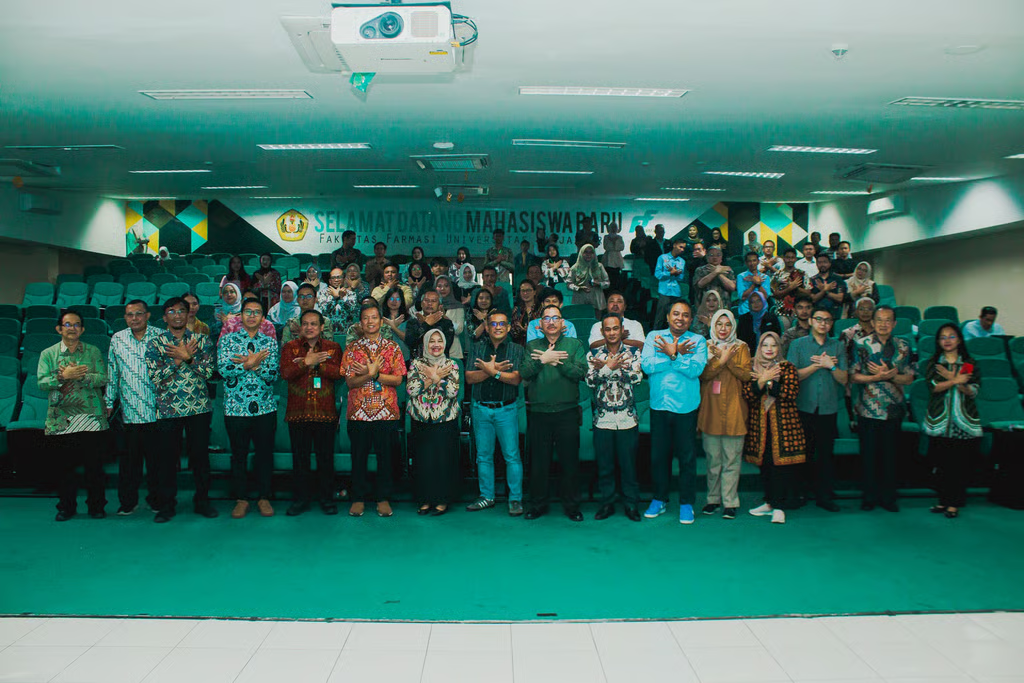
Head of the Army Health Center Pharmacy Institute (Lafi Puskesad), Colonel Ckm Dr. apt. Drs. TPH Simorangkir, M.Sc., CIT, was also present and assessed that this collaboration was in line with the vision of strengthening national health resilience. He emphasized that Indonesia has rich biodiversity which can be the basis for independence in pharmaceutical raw materials, as long as it is accompanied by regional potential mapping, downstreaming based on local characteristics, and cross-sector synergy without sectoral egos. "We need to ensure that research results do not stop in the laboratory, but actually enter the industrial supply chain, provide benefits to society, and support the 2045 Golden Indonesia target," he said.
FGDs present complementary cross-sector views. Prof. Sriwidodo started by emphasizing that research must be based on upstream sustainability. "If the raw materials are lost, all innovation will be paralyzed. So, research must touch on agronomy and supply sustainability."
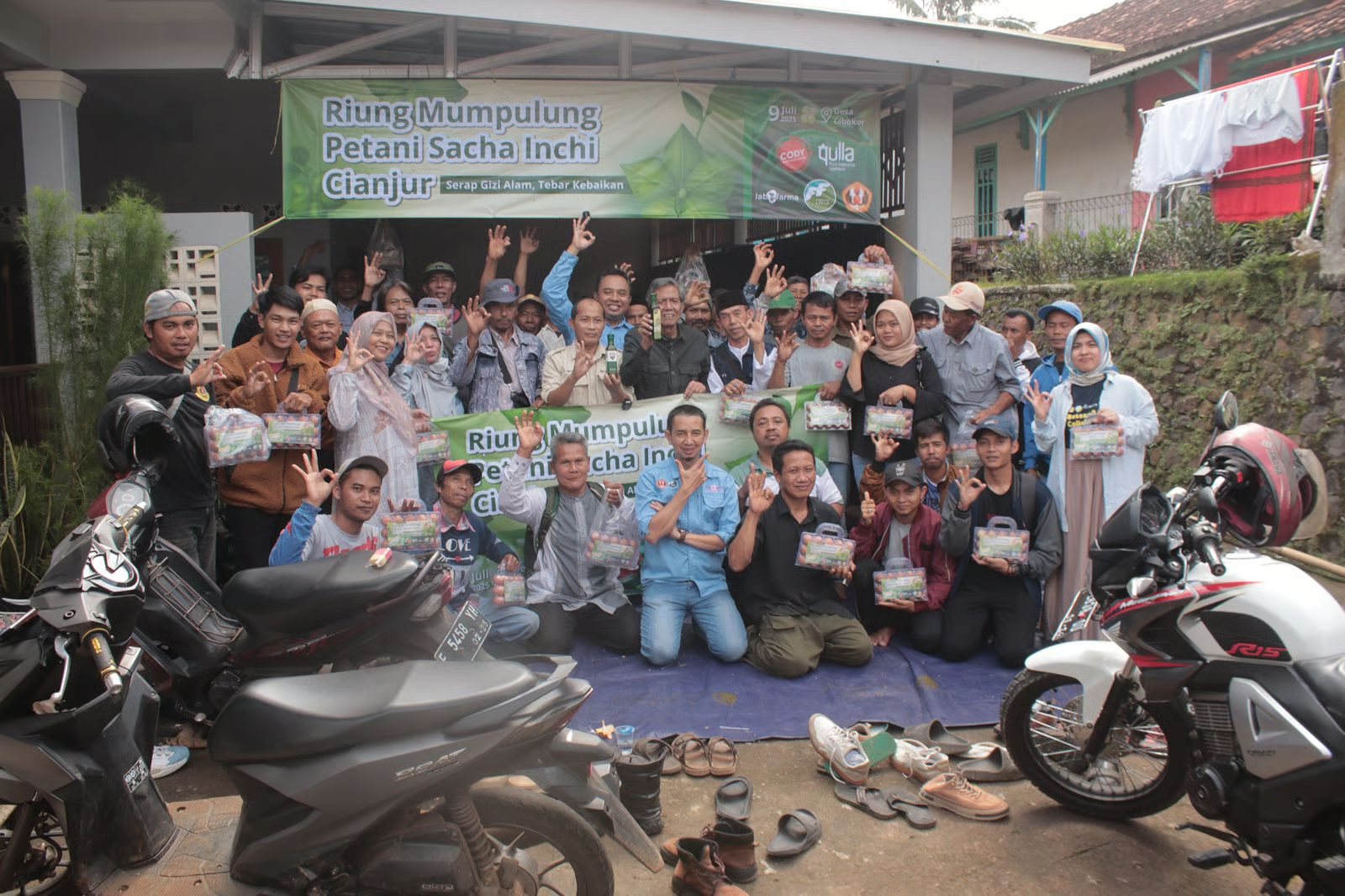
Teguh Dwi Raharjo S.P. from Gapoktan speaks directly from farmers' experiences. He described sacha inchi as a high-value crop, but sensitive in the post-harvest stage. "Oil content and quality really depend on the method of harvesting and drying. If this fails, prices fall, farmers suffer losses, and industry is also affected."
Hadiyan Nur Sofyan, S.T., M.P., CDMP, CNLPC, who acts as a bridge between research and industry, highlighted the need for parties who understand the relationship between the two. "The challenge faced by farmers is that when they have succeeded in producing raw materials, who wants to buy or process these raw materials further? So, this bridge is important so that research does not stagnate in the laboratory, but also does not fall into production without a scientific basis."
From a regulatory perspective, apt. Leni Maryati, S.Si., M.Sc. from BBPOM Bandung reminded that the great opportunity for herbs must be accompanied by safety and quality. "Regulation is not to hinder, but to ensure that products can be accepted by consumers and the international market. Downstreaming must be in line with this standard."
Stefanus Zakarias from Biotechnology Research Innovation (InRitek) closed the session by reminding him of the urgency of execution. "The global market moves fast. If we wait too long at the registration or market test table, the opportunity can be taken by other countries that are ready first."
This discussion emphasizes that downstream pharmaceutical research is not just a transfer of technology, but the process of building a strong value chain from upstream to downstream—from farmers to consumers, with industry and regulation going hand in hand. Through this PKS and FGD, Unpad emphasized its commitment to reducing dependence on imports and making Indonesia a center for sacha inch innovation in Asia.
Email:
info@sachainchiindonesia.id;
info@labcos.id; or info@labfarmaunpad.id
Website:
https://sachainchiindonesia.id
https://labfarmaunpad.id
https://labcos.id